Local Service Information
Concrete
A small town on the upper Skagit River in the eastern foothills of Skagit County.
County: Skagit County
ZIP Codes Served: 98237
Neighborhoods: The small upper-Skagit town core along the Skagit River
Nearby Communities: Sedro-Woolley, Hamilton, Lyman
Common Property Types: Predominantly single-family homes on larger and rural lots, with some farm and acreage properties; commercial property is limited to small retail and civic buildings.
Local Tree & Landscape Notes: Mountain and heavily forested setting with large conifers including Douglas fir, western hemlock, and western red cedar. Steep terrain, limited access, and large trees are key considerations for planning and rigging.
Permit Considerations: Permit requirements vary depending on tree size, species, protected areas, shoreline regulations, critical areas, and local municipal code. Always verify current requirements with the local jurisdiction before beginning work.
Climate: Marine west coast climate typical of the Puget Sound region: mild, wet winters and warm, relatively dry summers, with most rainfall from fall through spring. Occasional wind, snow, and ice events and seasonal soil saturation influence tree health and the timing of tree work.
Concrete is a small upper-Skagit town strung along the Skagit River near the historic Henry Thompson Bridge, with single-family homes on larger and rural lots. Its higher-elevation setting brings colder, snowier winters and heavy damp, so moss, algae, and lichen grow thick on roofs, siding, and concrete through much of the year. Exterior cleaning keeps these upper-valley properties clear of growth and protected against a demanding mountain-river climate.
Because Concrete sits higher and colder than the Skagit lowlands, exterior cleaning here works around a shorter dry season and heavier moss load, leaning on low-pressure roof treatment and soft washing that clears stubborn lichen without harming weathered siding. Crews plan for the wetter, cooler upper-valley conditions.
Site Conditions: Cold, wet air and snowmelt off the upper Skagit keep Concrete roofs, shaded siding, and concrete heavy with moss, algae, and lichen, while conifer needles and pollen fill gutters and coat decks. Wood and vinyl siding, aging concrete, and outbuilding roofs all carry thick growth in this cool, high-valley setting.
Seasonal Considerations: Concrete’s narrow wash season lands in the warmest, driest part of summer, when roof and house washing can cure between rains; fall means clearing gutters and treating moss before snow arrives, and the cold, wet winters — snowier than the lowlands — keep lichen and mildew entrenched on shaded roofs and siding well into spring.
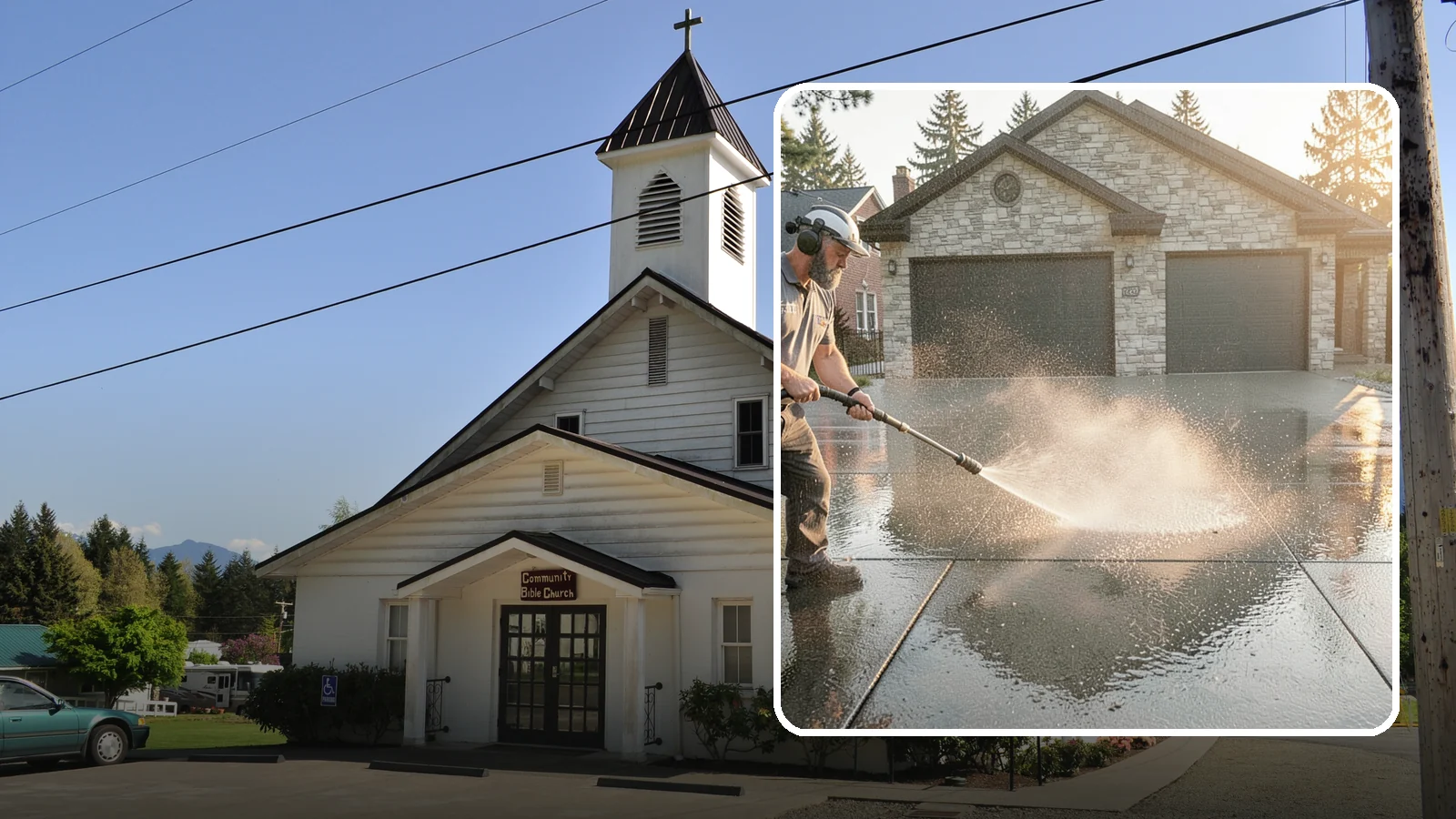
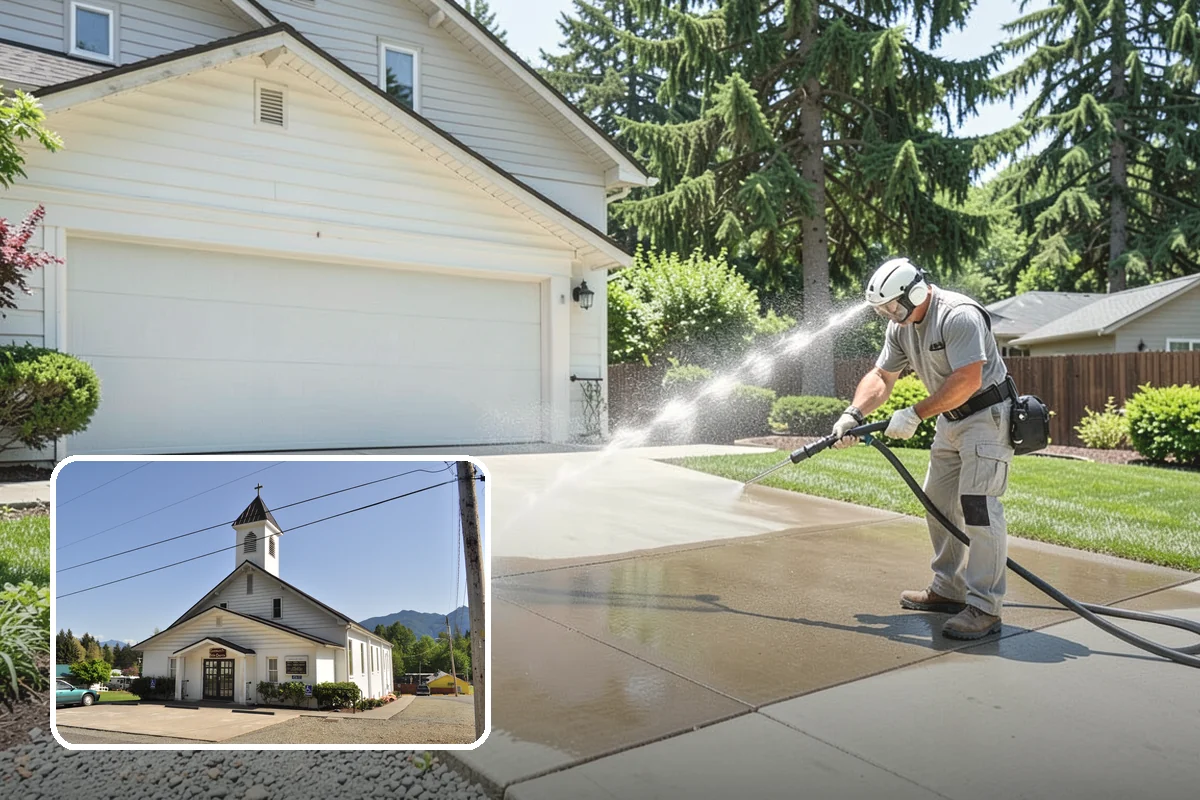
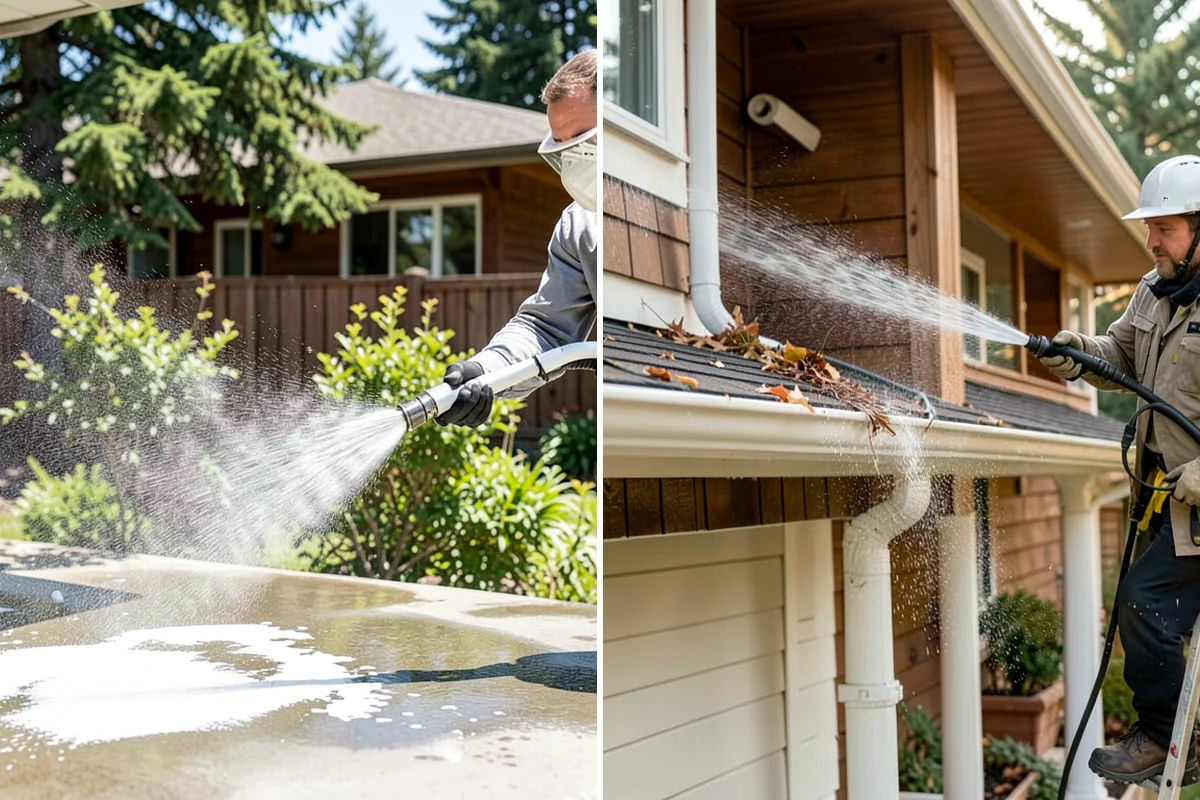
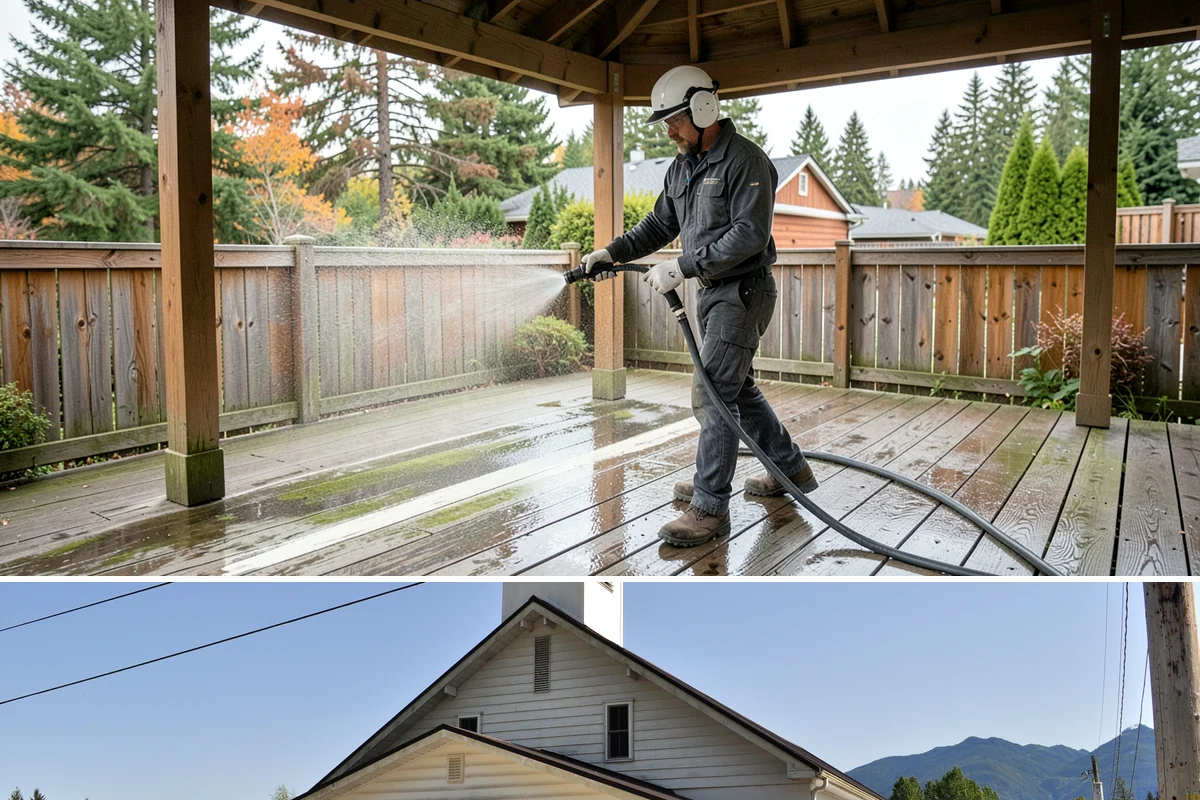
Common Project Types: Typical Concrete jobs are heavy roof moss and lichen removal, gutter cleaning, whole-house soft washing, and pressure washing of driveways, walks, and decks, with barn, shop, and outbuilding cleaning common on the rural and acreage lots near Hamilton and Lyman.
Property Styles: Concrete properties are mostly single-family homes on larger rural parcels, many older with wood or vinyl siding, metal or composition roofs, and detached shops or barns. The acreage, outbuildings, and steep shaded roof runs give each cleaning extensive, growth-heavy surface.
Local Materials & Plants: Surfaces cleaned around Concrete include wood, vinyl, and fiber-cement siding, weathered concrete, gravel-edged walks, and wood decking, all thick with the moss, algae, lichen, and mildew that flourish in the cold, wet upper Skagit valley. Conifer needles and forest pollen keep feeding the growth.
Planning Your Project: Planning Concrete cleanings means grabbing the limited warm, dry windows so surfaces cure, protecting well-heads, gardens, and plantings on rural lots during soft-wash rinses, and budgeting time for outbuildings and long roof runs. Roof and gutter work precedes siding so debris and runoff clear downward.
Ready to clear heavy moss and lichen from your Concrete home and outbuildings? Contact us to book upper-valley exterior cleaning.