Local Service Information
Arlington
A city on the Stillaguamish River in north Snohomish County near the Cascade foothills.
County: Snohomish County
ZIP Codes Served: 98223
Neighborhoods: Downtown, Smokey Point
Nearby Communities: Marysville, Stanwood, Granite Falls
Common Property Types: Predominantly single-family homes, with some townhomes and multifamily housing; commercial property includes small retail, civic, and light commercial buildings.
Local Tree & Landscape Notes: Forested foothill setting with conifers such as Douglas fir, western hemlock, and western red cedar, plus bigleaf maple and alder. Slopes, wet soils, and larger trees are common considerations for access and rigging.
Permit Considerations: Permit requirements vary depending on tree size, species, protected areas, shoreline regulations, critical areas, and local municipal code. Always verify current requirements with the local jurisdiction before beginning work.
Climate: Marine west coast climate typical of the Puget Sound region: mild, wet winters and warm, relatively dry summers, with most rainfall from fall through spring. Occasional wind, snow, and ice events and seasonal soil saturation influence tree health and the timing of tree work.
Sitting where the Snohomish County lowlands begin to rise near the Stillaguamish River, Arlington blends a walkable Downtown, the busy Smokey Point commercial strip, and outlying homes that all contend with a wetter, slightly cooler climate than the flats closer to the Sound. River-valley humidity and tree cover along corridors like the Centennial Trail keep siding, decks, and driveways shaded and damp, which is exactly what moss, algae, and mildew need to spread. Exterior cleaning here works across a broad canvas, from tidy residential streets to larger Smokey Point rooftops and parking aprons that collect road grime and biological staining.
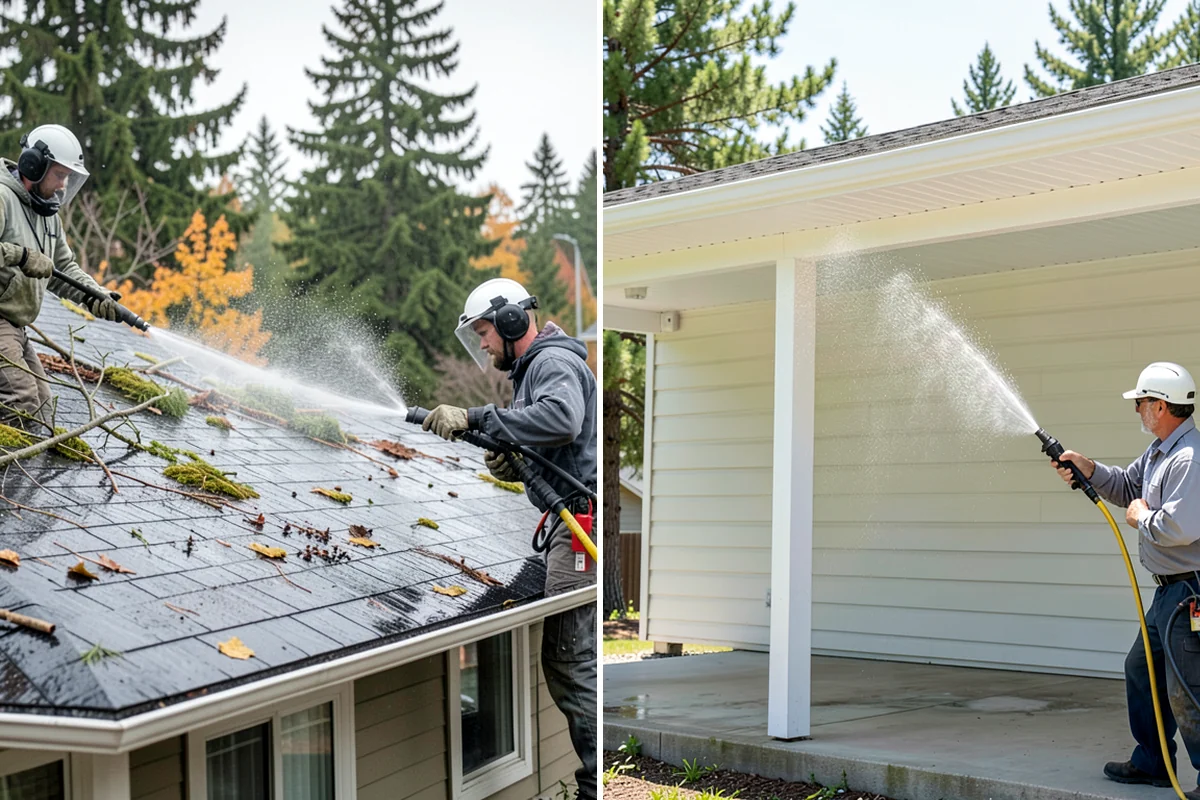
The usual approach mixes soft washing for house siding and roofs with stronger pressure cleaning for the concrete and asphalt aprons found around Smokey Point businesses, since the cooler, damper air near the Stillaguamish leaves surfaces holding growth longer; each job is matched to its material before any water hits it.
Site Conditions: Elevation-tinged cool and river-valley moisture keep north-facing walls, roofs, and shaded slabs wet enough for heavy moss, algae, and lichen, while the tree canopy near the Centennial Trail and Stillaguamish sheds needles, leaves, and pollen that clog gutters and stain concrete.
Seasonal Considerations: Late spring and summer are the reliable window for house and driveway washing once the valley dries out; fall means clearing gutters heavy with leaf and needle fall and stripping moss before the long wet season; winter keeps mildew on siding and green film on shaded walkways and decks as steady maintenance concerns.
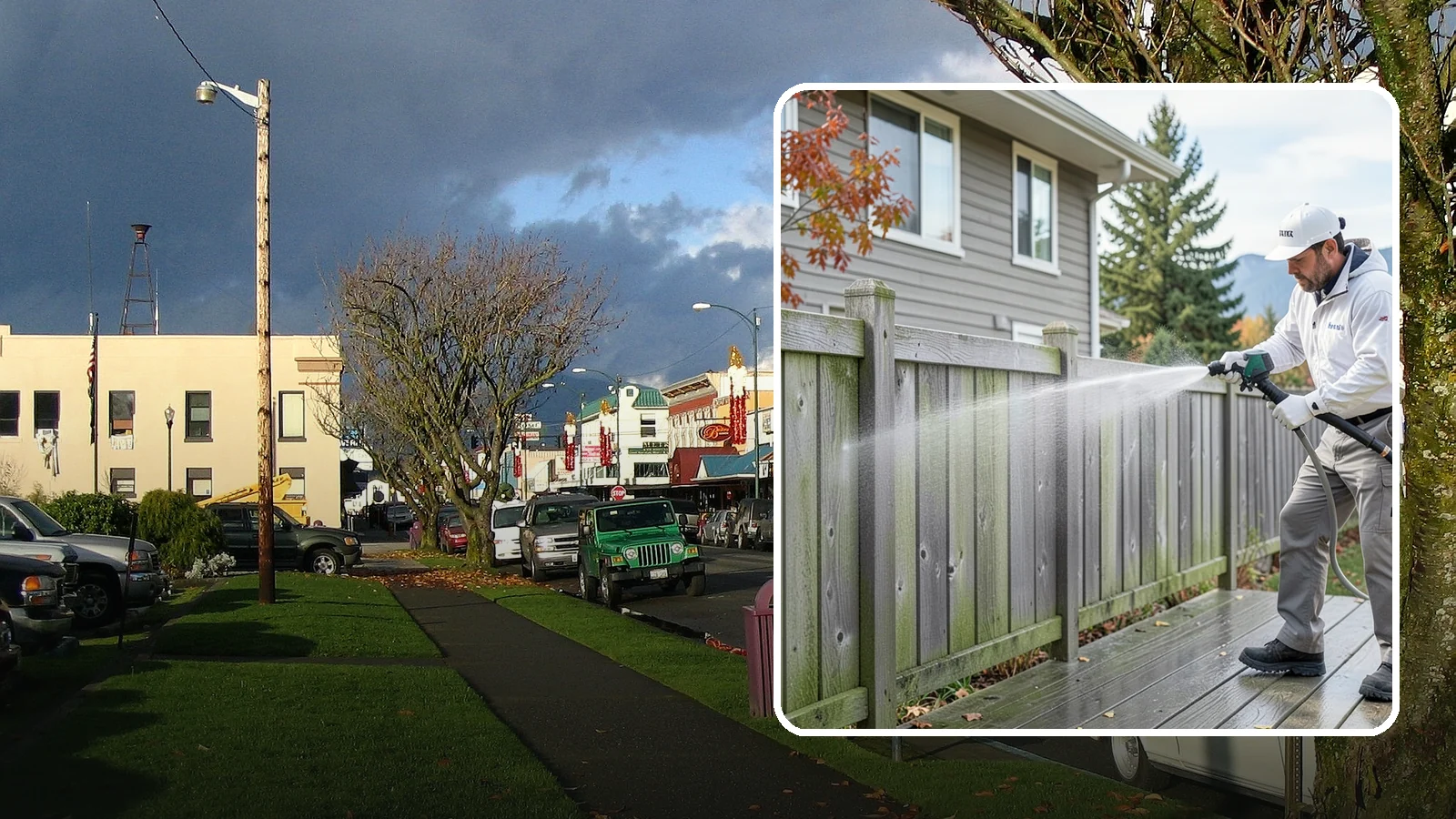
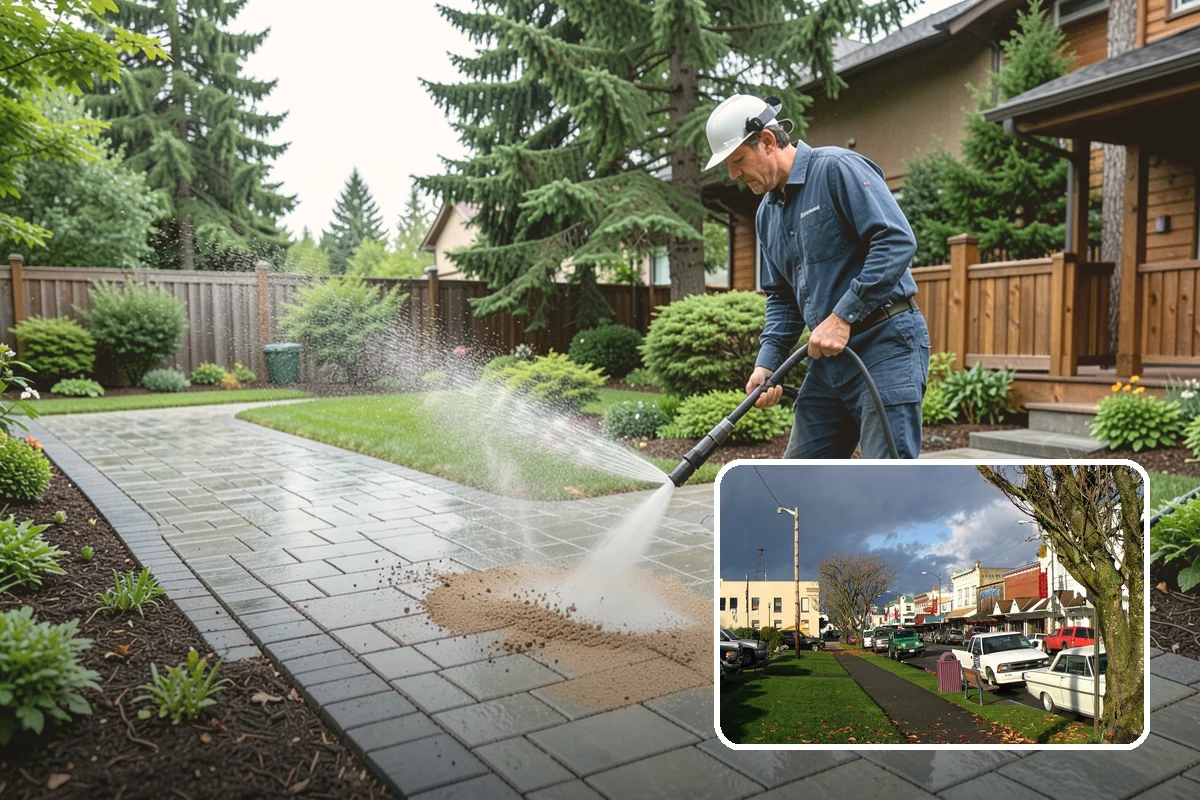
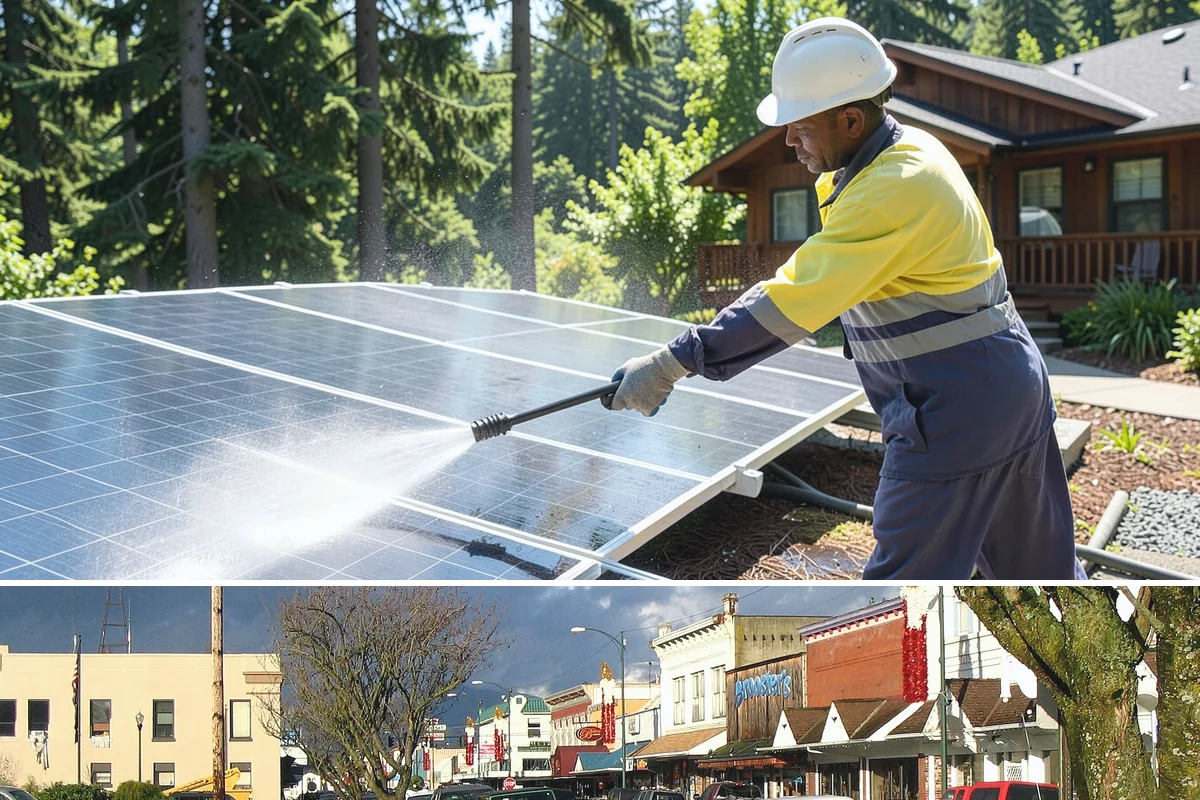
Common Project Types: Work commonly includes full house soft washes, driveway and walkway cleaning, deck and fence restoration, roof and gutter service, and moss removal on residential lots, plus larger storefront and parking-area washing along the Smokey Point corridor.
Property Styles: Arlington properties span Downtown’s older homes with wood and vinyl siding, newer subdivisions with fiber-cement cladding, and outlying houses on bigger lots, most with concrete drives and wood or composite decks that sit in valley shade.
Local Materials & Plants: Surfaces cleaned range from vinyl, wood, and fiber-cement siding to concrete drives, paver patios, and composite decking, while the growth removed is the valley’s thick moss, green and black algae, lichen, and mildew, joined by the leaf tannin and pollen staining common near the river and trail.
Planning Your Project: Because the valley holds moisture, jobs are scheduled for genuine dry windows so surfaces can cure between passes, with landscaping along foundations rinsed and screened during soft-wash; planning accommodates both compact Downtown lots and larger outlying parcels without stating any fixed permit rule.
Whether it is a Downtown Arlington home or a Smokey Point storefront wearing valley moss, reach out to line up a soft-wash and surface-cleaning plan for your property.