Local Service Information
Duvall
A small city in the Snoqualmie River valley of rural northeast King County.
County: King County
ZIP Codes Served: 98019
Neighborhoods: Downtown Duvall (Main Street); residential areas above the Snoqualmie River valley
Nearby Communities: Carnation, Monroe, Redmond
Common Property Types: Predominantly single-family homes, with some townhomes and multifamily housing; commercial property includes small retail, civic, and light commercial buildings.
Local Tree & Landscape Notes: Common regional trees include Douglas fir, western red cedar, western hemlock, bigleaf maple, and red alder, alongside many ornamental species. Wet soils and dense canopy are common considerations for access and scheduling.
Permit Considerations: Permit requirements vary depending on tree size, species, protected areas, shoreline regulations, critical areas, and local municipal code. Always verify current requirements with the local jurisdiction before beginning work.
Climate: Marine west coast climate typical of the Puget Sound region: mild, wet winters and warm, relatively dry summers, with most rainfall from fall through spring. Occasional wind, snow, and ice events and seasonal soil saturation influence tree health and the timing of tree work.
Duvall rises above the Snoqualmie River valley in rural King County, where Main Street’s historic core gives way to residential streets overlooking farmland and the Snoqualmie Valley Trail. The valley’s river-fed humidity and heavy tree cover push moss, algae, and mildew onto roofs, siding, and shaded concrete, and larger lots often mean longer driveways, fences, and outbuildings to keep clean. For Duvall’s mostly single-family homes, regular house washing and roof care are key to fighting the persistent green that valley dampness brings.
Valley moisture and rural lots shape how cleaning is approached in Duvall, so soft washing lifts algae from siding and outbuildings without forcing water behind finishes. Homes on the slopes above the Snoqualmie River often need roof moss treatment and long driveway or fence cleaning, while Main Street properties call for storefront and walkway washing.
Site Conditions: Perched over the damp Snoqualmie River valley in the Puget Sound lowlands, Duvall surfaces stay moist and shaded, feeding moss and lichen on roofs, algae on siding, and mildew on concrete. Valley fog, tree debris, and farm-area pollen leave a gritty film on walls, fences, and patios.
Seasonal Considerations: River-valley damp keeps Duvall roofs and walls green well into spring, so the drier summer months are best for house washing and moss removal. Autumn is the window for clearing gutters loaded with leaves and needles before valley rains set in, while foggy, wet winter spells are poor for driveway cleaning or sealing.
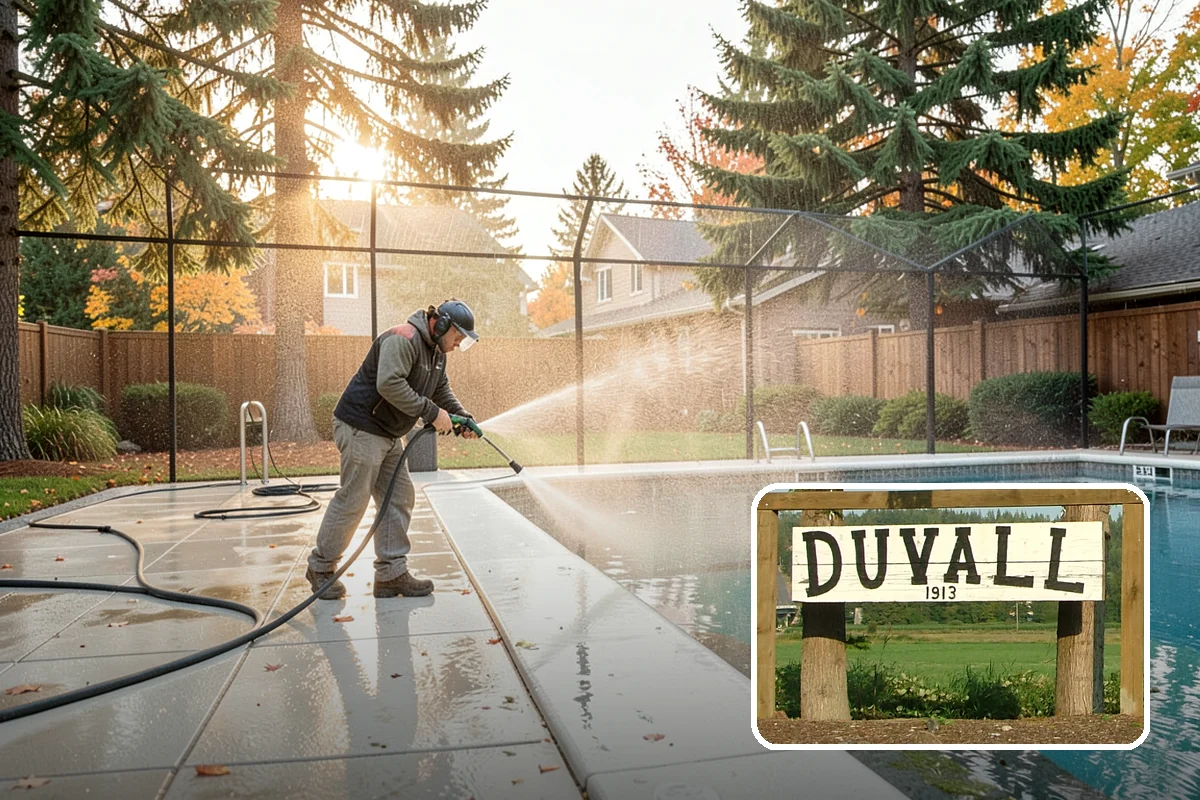
Common Project Types: Duvall jobs often mean soft washing valley-facing siding, removing roof moss from shaded homes, cleaning long rural driveways and fences, washing decks that overlook the Snoqualmie Valley Trail, and clearing gutters on single-family and multifamily properties around the Main Street core.
Property Styles: Duvall’s single-family homes, with a handful of townhomes and multifamily buildings, often sit on larger valley-view lots with extended driveways, wood fences, and outbuildings. Painted and vinyl siding plus wood decking pick up valley moisture and show algae quickly on shaded elevations.
Local Materials & Plants: Siding here runs to vinyl and painted wood over asphalt roofs, with gravel or concrete drives and wood decks and fences. Duvall’s valley humidity encourages thick roof moss, lichen on north walls, green algae on siding, and mildew plus pollen settling across fences and patios near the trail.
Planning Your Project: Planning Duvall work means catching the summer dry stretches, protecting valley-side gardens and lawns during rinsing, and timing gutter and roof jobs before the leaves and rain arrive. On rural lots, arranging access to long driveways, fences, and outbuildings keeps larger cleanings on track.
If valley moss or algae is creeping across your Duvall roof and siding above the Snoqualmie, reach out to plan a soft-wash and surface-cleaning visit built for river-valley conditions.