Local Service Information
Auburn
A city in the Green River valley of south King County, extending slightly into Pierce County.
County: King County (with a small portion in Pierce County)
ZIP Codes Served: 98001, 98002, 98092
Neighborhoods: Lea Hill, Lakeland Hills, West Hill, Downtown
Nearby Communities: Kent, Federal Way, Pacific, Algona
Common Property Types: Predominantly single-family homes with townhomes and some condominiums and multifamily housing; commercial property includes retail, office, and small mixed-use buildings.
Local Tree & Landscape Notes: Common regional trees include Douglas fir, western red cedar, western hemlock, bigleaf maple, and red alder, alongside many ornamental species. Wet soils and dense canopy are common considerations for access and scheduling.
Permit Considerations: Permit requirements vary depending on tree size, species, protected areas, shoreline regulations, critical areas, and local municipal code. Always verify current requirements with the local jurisdiction before beginning work.
Climate: Marine west coast climate typical of the Puget Sound region: mild, wet winters and warm, relatively dry summers, with most rainfall from fall through spring. Occasional wind, snow, and ice events and seasonal soil saturation influence tree health and the timing of tree work.
Spread across the Green River valley floor and the surrounding hills of Lea Hill, Lakeland Hills, and West Hill, Auburn combines a dense mix of single-family homes, townhomes, condos, and commercial frontage that all weather the Puget Sound lowlands’ damp. Valley-bottom neighborhoods near the White River hold humidity that feeds moss and algae, while the hillside subdivisions catch shade and tree debris on their roofs and decks. From Downtown storefronts to the residential streets near Game Farm Park, exterior cleaning in Auburn spans a wide range of surfaces and buildup, making method selection as important as the wash itself.
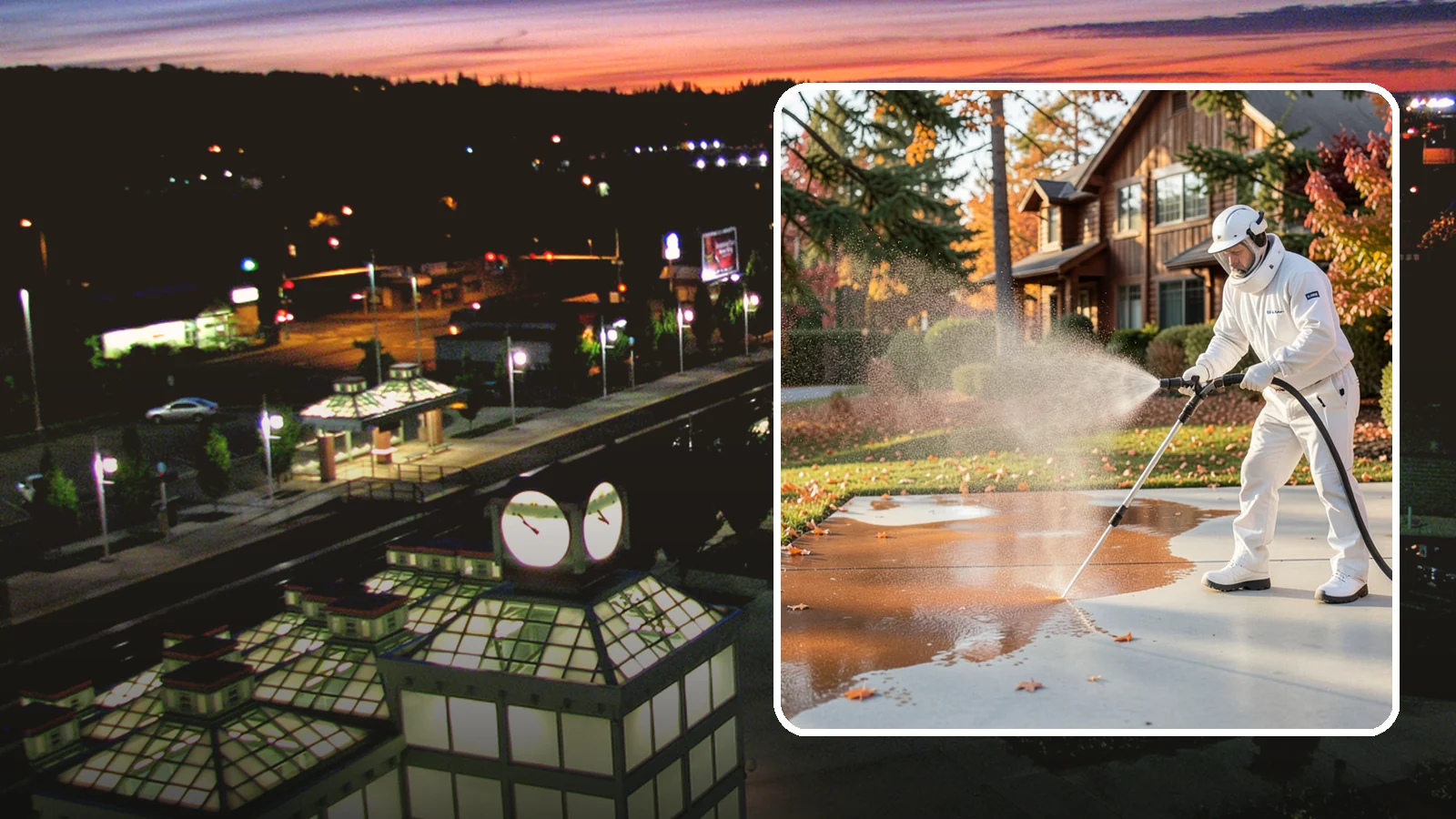
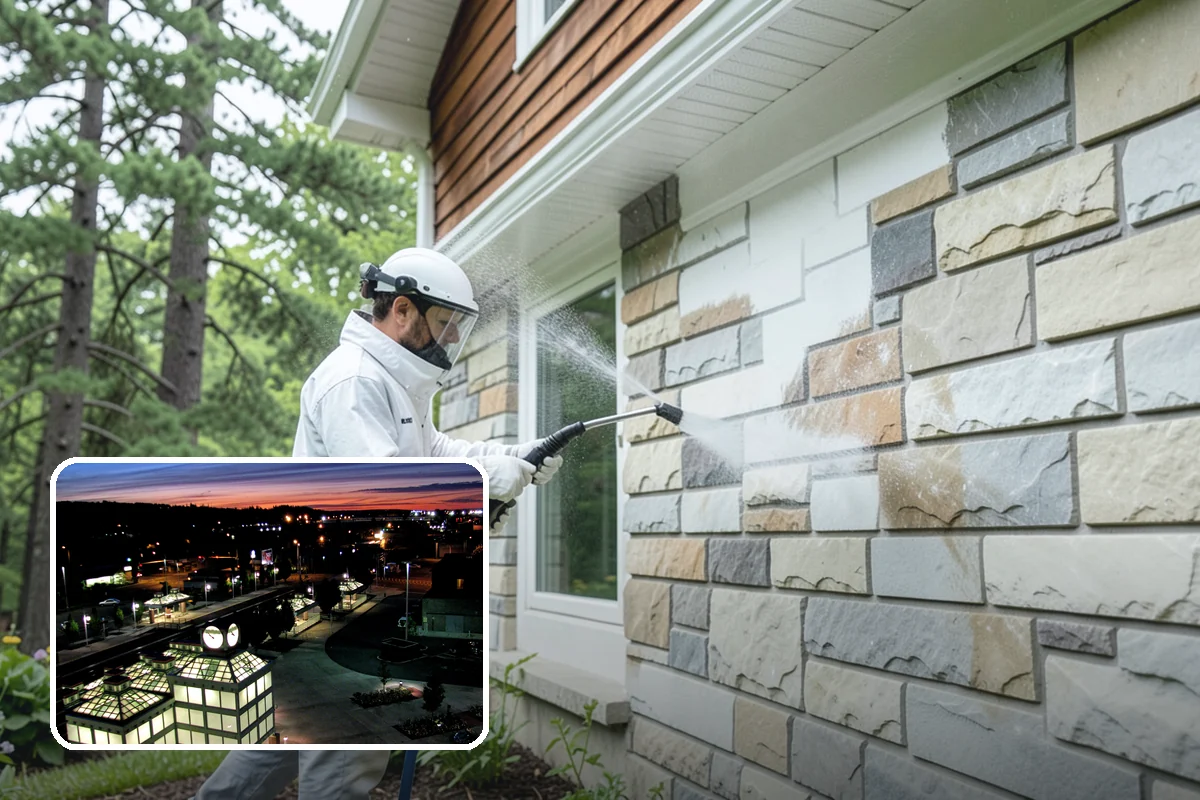
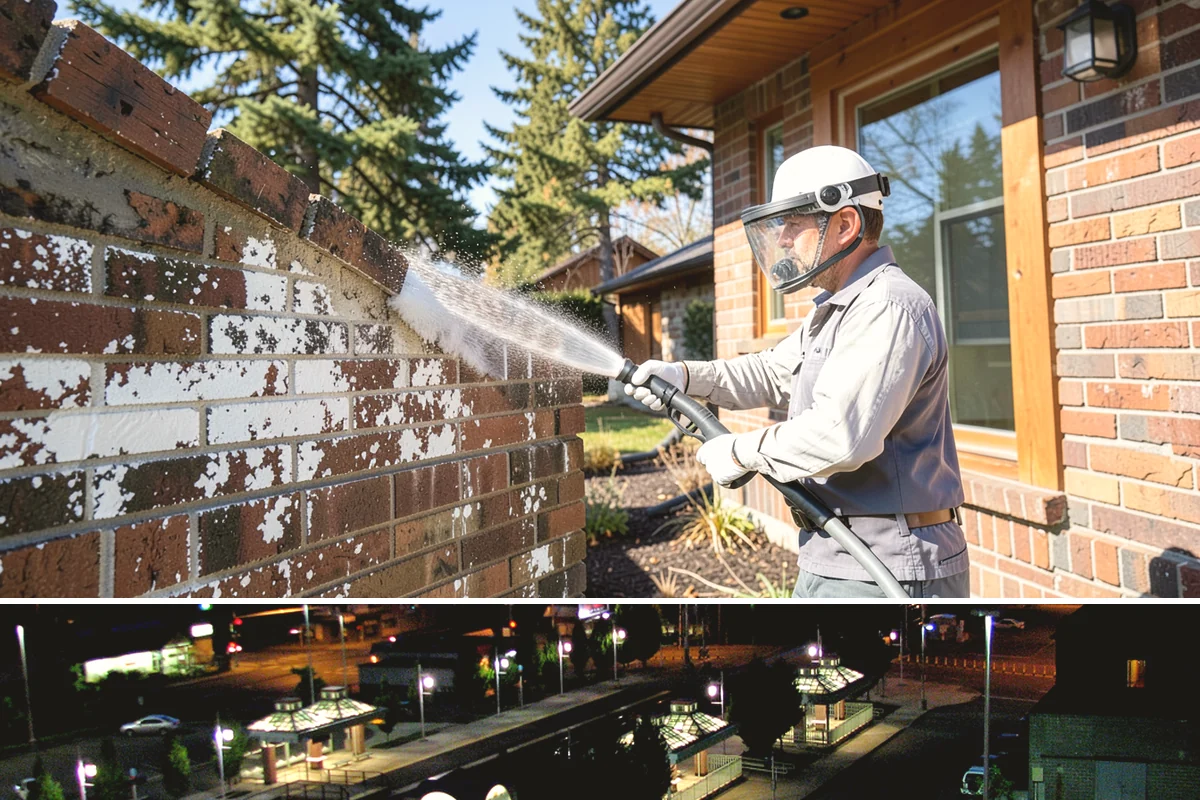
Auburn cleaning typically layers gentle soft washing for the many vinyl and fiber-cement homes across Lakeland Hills and Lea Hill with heavier pressure work on the valley’s commercial concrete and parking areas; the damp valley air lets growth linger, so crews check each surface and adjust pressure rather than treating the whole property the same.
Site Conditions: Valley-bottom humidity off the White and Green Rivers keeps siding, roofs, and slabs damp, encouraging moss, algae, and mildew on shaded elevations, while the hillside canopy over Lea Hill and West Hill drops needles and pollen that streak gutters, walkways, and driveways.
Seasonal Considerations: Spring and summer bring the main house-washing and driveway season as the valley finally dries; fall is dominated by gutter clearing under heavy leaf and needle fall and pre-winter moss treatment on roofs; winter leaves mildew on siding and slick algae on the shaded concrete common in the lower neighborhoods near the Green River.
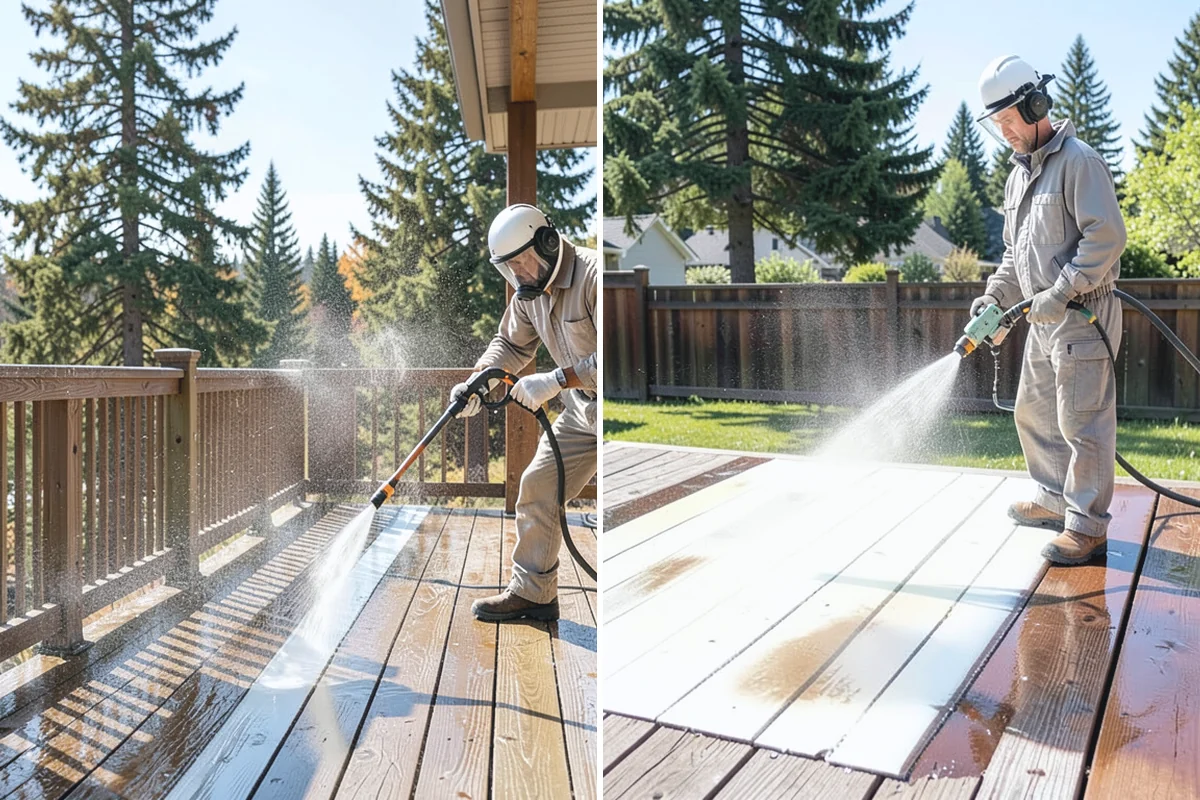
Common Project Types: Jobs commonly run from whole-house soft washes and driveway degreasing to patio, deck, and fence cleaning, gutter and roof service, and moss removal on residential lots, along with sizable storefront and lot cleaning around Downtown Auburn and its retail corridors.
Property Styles: The building stock mixes valley single-family homes and townhomes with hillside subdivisions of fiber-cement and vinyl siding, plus Downtown’s older wood-sided houses and mixed-use frontage, most fronted by concrete drives and wood or composite decks.
Local Materials & Plants: Cleaned surfaces include vinyl, fiber-cement, and painted-wood siding, broad concrete drives and commercial slabs, paver patios, and composite decks, while the growth being cleared is the lowland mix of moss, green and black algae, lichen, and mildew, plus valley pollen and leaf-tannin staining.
Planning Your Project: With the valley holding damp, work is planned around drier spells so cleaned surfaces can dry properly, and foundation plantings are soaked and shielded before soft-wash solution is applied; scheduling flexes between tight Downtown lots and sprawling hillside parcels without asserting any particular permit requirement.
From a Lakeland Hills rooftop to a Downtown Auburn storefront, if moss and grime are settling in, connect with us to shape a soft-wash and surface-cleaning plan.